


 A
Brief History of the Maya and Copan
A
Brief History of the Maya and Copan
The Maya are the modern native American peoples who live in Mexico, Belize, Guatemala, Honduras and El Salvador. There are 28 Maya languages still spoken in these regions. The "ancient Maya" refers to the ancestors of these modern people, one of the ancient native American peoples who lived in Mexico and Central America from 1500 BC to 1500 AD. The classic period of the Maya art and architecture was 250 - 900 AD.
The Maya are known for their tremendous accomplishments in math, astronomy, architecture, art, and in developing one of the five seminal writing systems in the world.
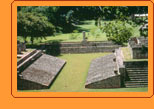
Copan is the name given to the ruins of an ancient Maya city in what is now western Honduras, Central America. It is located 600 meters above sea level along the Copan River, in the narrow pine forested Copan Valley. Because of its significant art and architecture, the government of Honduras created a national park to protect this site. The ruins are located 184 km from the city of San Pedro Sula and 483 km from the capital city, Tegucigalpa.
Renowned early 20th century archaeologist Sylvanus Morley called Copan the "Athens of the New World", recognizing their artistic value and ranking them as one of the most impressive achievements of ancient America and of humanity as a whole. This fact was once again recognized in 1980 when Copan was designated a world heritage site by UNESCO.
The ruins have been the source of exploration and research since the 1830s. This attention is deserved due to the quality and quantity of the architectural and sculptural monuments. Archaeological excavations continue today, making Copan one of the longest and most seriously studied Maya site in the world.
 Over
150,000 visitors come to Copan each year from all over the world. The
charming red tile and white stucco town of Copan Ruinas is barely one
kilometer away from the archaeological park. There you can find good quality
hotels, restaurants and tourist information.
Over
150,000 visitors come to Copan each year from all over the world. The
charming red tile and white stucco town of Copan Ruinas is barely one
kilometer away from the archaeological park. There you can find good quality
hotels, restaurants and tourist information.